High-protein vegetarian meal plan

One 43g breakfast. One 39g lunch. Repeat when life is busy.

Start with this egg-free breakfast and lunch, or choose from two more of each below. Every pair uses dairy and plant protein to put roughly 80–86 grams on autopilot before dinner—without rebuilding your day in a tracking app.

≈ 43gbreakfast
≈ 39glunch
≈ 82gby dinner

Default pair: The example math uses Orgain 21g powder, FAGE 0% plain Greek yogurt, Good Culture 2% cottage cheese and one regular slice of Dave’s 21 Whole Grains and Seeds. Your labels decide your exact total.

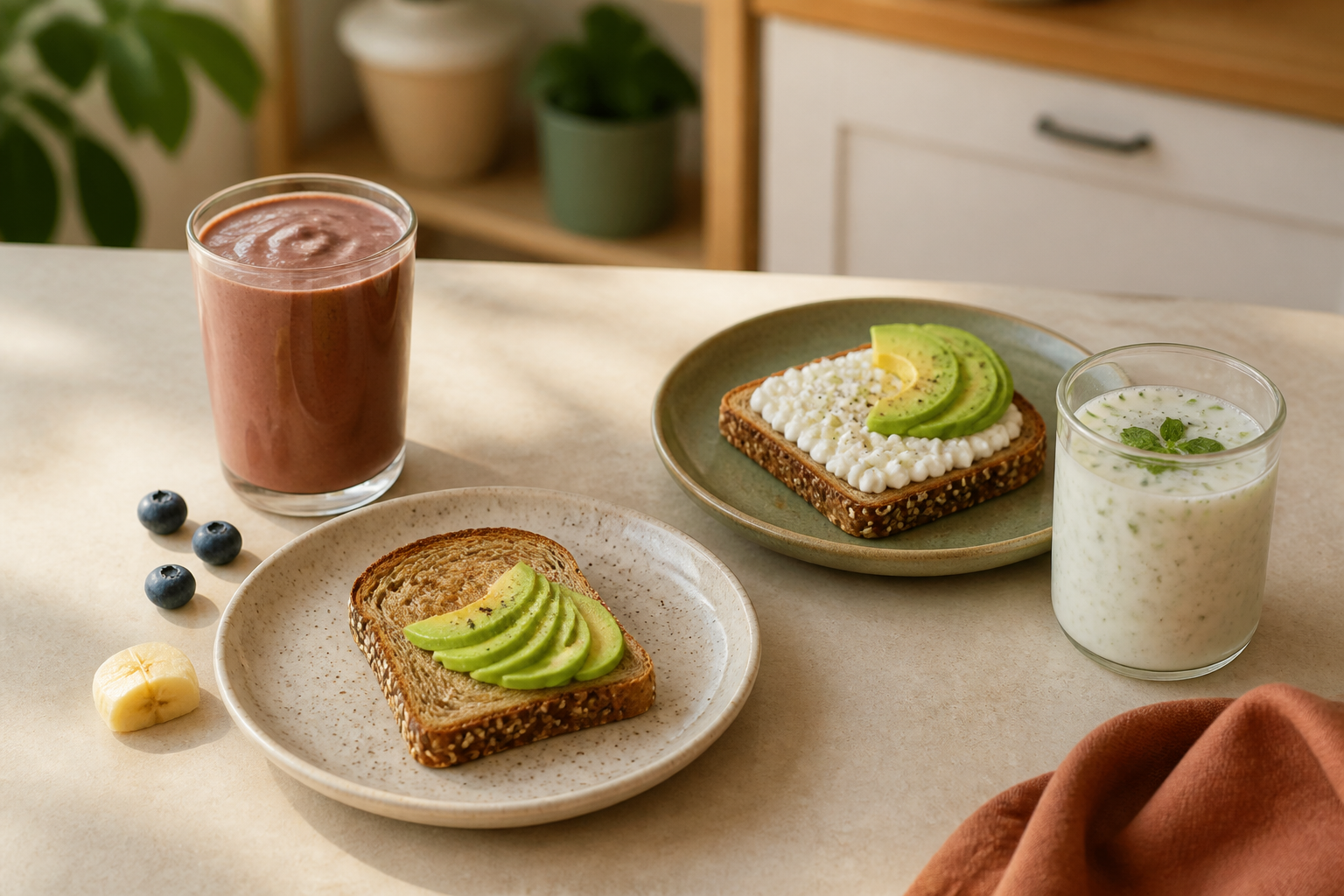
Chocolate Greek-yogurt protein smoothie and avocado toast beside cottage-cheese avocado toast and Greek-yogurt chaas
Breakfast + lunch≈ 82g protein · 860 calories

The simple formula

Build the first 80g. Let dinner be dinner.

43g breakfast 39g lunch ≈ 18g flexible dinner ≈ 100g day

Breakfast 1 · about 8 minutes

Greek-yogurt chocolate smoothie + avocado toast

≈ 43g≈ 490 calories

Make the smoothie

  1. 1

    Add one serving chocolate protein powder that provides about 21g protein.

  2. 2

    Add ½ cup plain nonfat Greek yogurt, ¼ cup milk, ¼ banana and a handful (about ½ cup) frozen blueberries.

  3. 3

    Add ¾ cup water and ice, then blend until smooth. Add a little more water if it is too thick.

Make the toast

Toast one regular slice Dave’s 21 Whole Grains and Seeds and top with ¼ avocado, salt, black pepper and red pepper flakes.

IngredientProteinCalories
Orgain chocolate powder, 1 serving21g150
Plain 0% Greek yogurt, ½ cup≈ 12g≈ 60
Milk, ¼ cup≈ 2g≈ 30
¼ banana + ½ cup blueberries≈ 1g≈ 60
Dave’s bread, 1 regular slice6g110
Avocado, ¼ medium≈ 1g≈ 80
Breakfast estimate≈ 43g≈ 490

Check the front of your tub

“Vega” is not one protein number.

Vega products currently range from 15g to 30g protein per serving. Use the row that matches your label.

15g powder

Use ¾ cup Greek yogurt instead of ½ cup, or eat extra yogurt on the side. Breakfast lands near 40g.

20–25g powder

Use the recipe as written. Breakfast lands around 42–47g.

30g powder

The recipe will exceed 50g. That is not automatically better; use the portion that fits your needs.

Lunch 1 · about 7 minutes

Cottage-cheese avocado toast + Greek-yogurt chaas

≈ 39g≈ 370 calories
IngredientProteinCalories
Dave’s bread, 1 regular slice6g110
2% cottage cheese, ½ cup14g90
Avocado, ¼ medium≈ 1g≈ 80
Plain 0% Greek yogurt, ¾ cup18g90
Water + spices0g≈ 0
Lunch estimate≈ 39g≈ 370

Make the toast

Toast one regular slice Dave’s 21 Whole Grains and Seeds. Spoon ½ cup cottage cheese over it, add ¼ sliced or smashed avocado, then season with pepper and red pepper flakes.

Make the chaas

Whisk or blend ¾ cup plain nonfat Greek yogurt with cold water until drinkable. Season with salt, mint powder, black pepper and any spices you like.

Cottage cheese and seasoned chaas can both contain substantial sodium. Taste before adding salt and choose lower-sodium products if that is appropriate for you.

Two more breakfasts + two more lunches

Pick one pair. Repeat it all week.

These are complete alternatives—not extra food to add to the default meals. Choose one breakfast and one lunch, calculate your brands once and use that pair for several days.

Breakfast optionsBoth provide about 44g protein before optional fruit

Breakfast 2

Chocolate overnight protein oats

≈ 44g≈ 480 cal + fruit

Mix it in a jar at night. In the morning, breakfast is already decided.

  • Old-fashioned oats, ½ cup dry≈ 5g · 150 cal
  • Chocolate protein powder, 1 serving21g · 150 cal
  • Plain 0% Greek yogurt, ½ cup≈ 12g · 60 cal
  • Milk, ½ cup≈ 4g · 60 cal
  • Chia seeds, 1 tablespoon≈ 2g · 60 cal
  • Fruit of choice for toppingamount varies
  1. Stir everything together with a splash of water and a pinch of cinnamon.
  2. Cover and refrigerate overnight. Add water or milk in the morning if you want it thinner.
  3. Top with the fruit you enjoy—berries, sliced banana, apple, peaches or another favorite.

Repeatable prep: Make three jars at once; prepare the next two midweek. Keep cut fruit separate until serving.

Breakfast 3

Chocolate-PB Greek-yogurt crunch bowl

≈ 44g≈ 350 cal

A no-blender option for mornings when you want something spoonable.

  • Plain 0% Greek yogurt, 1 cup≈ 24g · 120 cal
  • Chocolate protein powder, ½ serving≈ 10.5g · 75 cal
  • PB2 powdered peanut butter, 2 tablespoons6g · ≈ 60 cal
  • Blueberries, ½ cup≈ 0.5g · 40 cal
  • Pumpkin seeds, 1 tablespoon≈ 3g · 55 cal
  1. Mix the yogurt, protein powder and PB2. Add one spoonful of water if needed.
  2. Top with blueberries and pumpkin seeds immediately before eating.

Repeatable prep: Pre-portion the dry powders and seeds for five days; add yogurt and berries each morning.

Lunch optionsAbout 39–42g protein

Lunch 2

Crispy tofu-edamame rice bowl

≈ 39g≈ 530 cal

Cook a large tray of tofu and rice once, then assemble five nearly identical bowls.

  • Extra-firm tofu, 8 ounces≈ 21g · 190–215 cal
  • Shelled edamame, ¾ cup≈ 13.5g · 140–160 cal
  • Cooked brown rice, ½ cup≈ 2.5g · 110 cal
  • Broccoli, peppers or slaw, 1 cup≈ 2g · 40–60 cal
  • Soy sauce, lime and chili dressing≈ 0g · 20–30 cal
  1. Press and cube tofu. Season, then bake, air-fry or pan-sear until browned.
  2. Divide tofu, edamame, rice and vegetables into containers. Add dressing after reheating.

Repeatable prep: Prepare three lunches; freeze or make the last two midweek for food quality.

Lunch 3

Spiced lentil-quinoa bowl + raita

≈ 42g≈ 480 cal

An Indian-inspired bowl that uses the same Greek yogurt in a savory way.

  • Cooked lentils, 1 cup≈ 18g · 230 cal
  • Cooked quinoa, ½ cup≈ 4g · 110 cal
  • Plain 0% Greek yogurt, ¾ cup18g · 90 cal
  • Cucumber, tomato and herbs, 1 cup≈ 2g · 40–50 cal
  1. Season warm lentils and quinoa with cumin, coriander, turmeric, chili and lemon.
  2. Mix yogurt with cucumber, mint, black pepper and salt; serve as raita beside the bowl.

Repeatable prep: Portion the lentil-quinoa base for five days; keep the raita separate and make it twice weekly.

Protein and calories are estimates. Brands, cooked weights, milk, dressings and oil change the totals—especially tofu and protein powder. Check the products you buy once and save your version.

Remove the weekday decisions

Change the pair weekly—not the plan daily.

Pick one breakfast and one lunch for the workweek. Next week, move to another pair. Dinner remains the place for variety, family meals and eating out.

Week01

The original pair · ≈ 82g

Smoothie toast + cottage-cheese toast

Repeat Breakfast 1 and Lunch 1 from Monday through Friday.

MTWTF
Week02

The prep-ahead pair · ≈ 83g

Overnight oats + tofu-edamame bowl

Repeat Breakfast 2 and Lunch 2 from Monday through Friday.

MTWTF
Week03

The no-blender pair · ≈ 86g

Yogurt crunch bowl + lentil-quinoa bowl

Repeat Breakfast 3 and Lunch 3 from Monday through Friday.

MTWTF
Week 4: Repeat the pair you liked best—or start the three-week rotation again.
“Calculate two meals once. Keep one meal flexible. Give yourself fewer chances to lose the habit.”

Week 1 · five breakfasts + lunches

Start with one small grocery list.

This list supports the original pair. When you rotate to Week 2 or 3, use the ingredient list on those two recipe cards. Buy package sizes that minimize waste in your household.

  • Chocolate protein powder5 servings
  • Plain Greek yogurt6¼ cups total
  • Cottage cheese2½ cups
  • Dave’s regular bread10 slices
  • Avocadosabout 3 medium
  • Bananas2 small
  • Frozen blueberries2½ cups
  • Milk1¼ cups

How the example was calculated

Use these numbers as a starting point—not a prescription.

The branded examples use current manufacturer nutrition facts: Orgain plant protein powder provides 21g protein and 150 calories per serving; Dave’s regular 21 Whole Grains and Seeds provides 6g and 110 calories per slice; FAGE Total 0% provides 18g and 90 calories per ¾ cup; Good Culture 2% cottage cheese provides 14g and 90 calories per ½ cup; PB2 provides 6g protein per serving; House Foods extra-firm tofu provides 8g per serving; and Birds Eye shelled edamame provides 9g per serving. Other foods use rounded database estimates.

Common questions

Keep the numbers useful—not rigid.

Is this meal plan vegetarian and egg-free?

Yes. It contains dairy but no eggs or meat. It is lacto-vegetarian, not vegan. If you eat eggs, the original egg-based breakfast and lunch is another repeatable option.

Can I use flavored Greek yogurt?

You can, but protein and added sugar vary. Plain strained Greek yogurt makes the label math easier and works in both the sweet smoothie and savory chaas.

Can I replace Greek yogurt with vegan yogurt?

Yes, but many plant-based yogurts have much less protein. Check the label and increase another protein source if you want to preserve the meal total.

Do I need exactly 100 grams of protein?

No. One hundred grams is an example, not a universal target. Your needs depend on body size, activity, age, health and goals. The repeatable-meal system also works with a lower or higher appropriate target.

Do I have to eat these meals every day?

No. They are defaults for busy days. The three-week rotation repeats one pair for five workdays, then changes the pair the following week. Eat something else when you go out and keep variety across dinners and weekends.