Egg-free vegetarian · Indian family food
A 100g protein Indian vegetarian diet you can actually repeat.
This is my practical, egg-free approach to a 100g protein Indian vegetarian diet: repeat a breakfast and lunch that do most of the work, calculate them once, and keep dal, rajma, chole, roti-sabzi or pasta flexible at dinner.
42g+vegetarian breakfast
48g+vegetarian lunch
1flexible dinner
Important: 100g is my example—not a universal target. Use the method with a protein goal that is appropriate for you.
Vegetarian definition: This plan is lacto-vegetarian—it includes dairy such as paneer and yogurt, but no eggs or meat.
The Indian repeatable formula
Front-load the predictable meals.
40g+ breakfast
+
40g+ lunch
+
10–20g family dinner
=
about 100g when appropriate
The complete example day
See the 100g path at a glance.
This total uses the paneer-besan breakfast and soy-chunk lunch shown below. Dinner stays flexible.
This is an estimate, not a guarantee or prescription. Your paneer, yogurt, soy-chunk label, vegetables, oil and portions determine your result.
Repeatable vegetarian breakfast
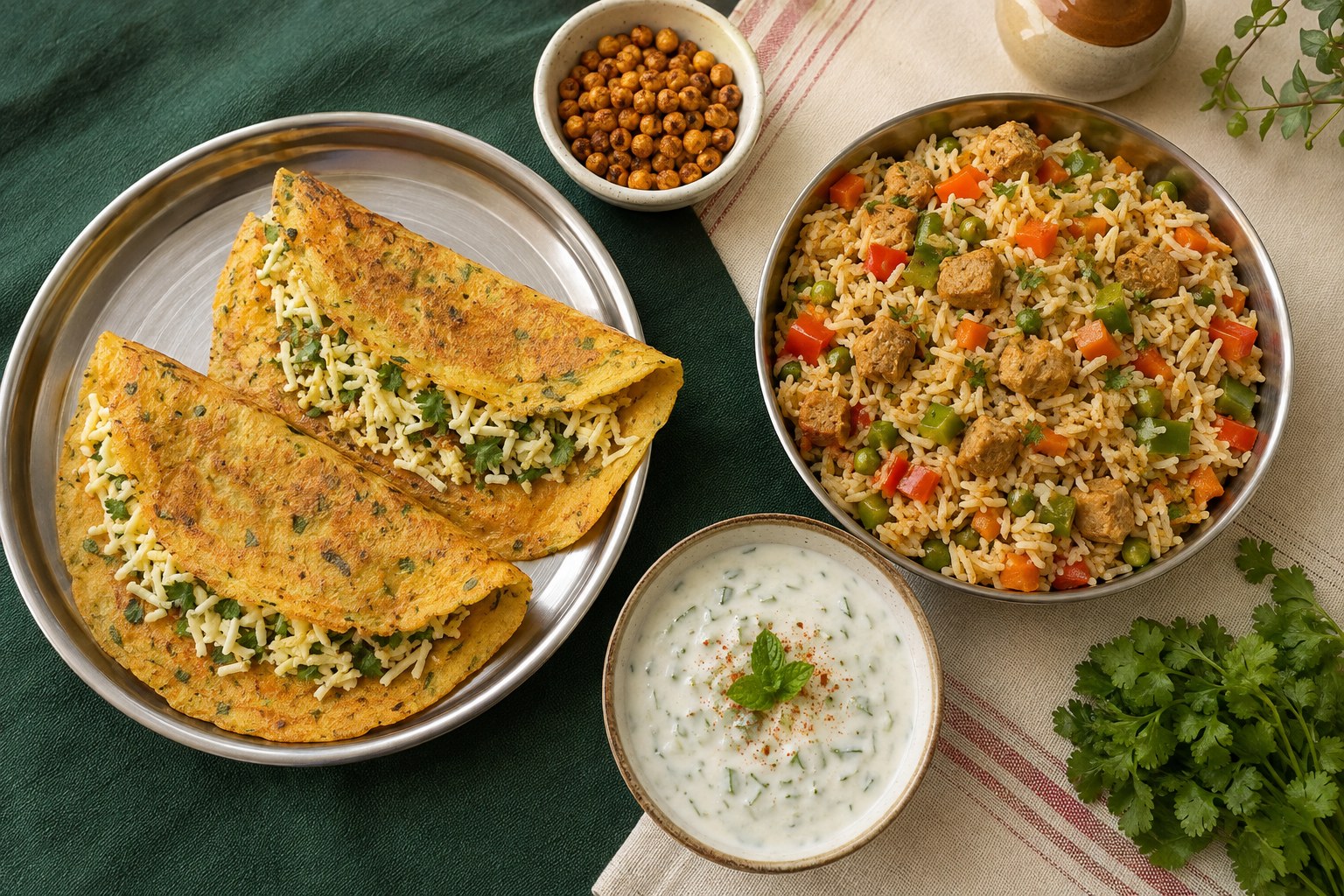
Paneer-filled besan chillas + strained yogurt
≈ 42–43g≈ 510–540 calories*
Standardize it once
- 1
Whisk 45g besan with water, ajwain, chili, salt and finely chopped vegetables into a pourable batter.
- 2
Make two chillas in a nonstick pan with a light oil spray.
- 3
Divide 75g grated paneer between them, fold and warm until the filling is heated.
- 4
Serve with 150g thick strained yogurt, seasoned sweet or savory as you prefer.
Priyanka normally cooks this by feel. These measured portions are a website starting point so a reader can calculate the recipe once, then learn what that portion looks like.
IngredientProteinCalories
Besan, 45g dry≈ 10g≈ 174
Regular paneer, 75g≈ 15g≈ 222
Strained yogurt, 150g proxy≈ 16g≈ 80
Vegetables + light oil spray≈ 1–2g≈ 35–60
Breakfast estimate≈ 42–43g≈ 510–540
Repeatable vegetarian lunch
Soy-chunk vegetable rice + thick raita
≈ 48–49g≈ 515–590 calories*
IngredientProteinCalories
Soy chunks, 50g dry≈ 25–26g≈ 175–185
Cooked rice, ¾ cup≈ 4g≈ 180–205
Mixed vegetables, 1½ cups≈ 3g≈ 60–80
Strained-yogurt raita, 150g≈ 16g≈ 80
Light cooking oil0g≈ 20–40
Lunch estimate≈ 48–49g≈ 515–590
Make the vegetable rice
- 1
Prepare 50g dry soy chunks according to the package—usually soaking or boiling, draining and squeezing out excess water.
- 2
Cook them with 1½ cups vegetables, ginger, cumin and the spices you use at home, using a modest amount of oil.
- 3
Fold in ¾ cup cooked rice and portion the finished meal into repeatable containers.
Make the raita
Mix 150g homemade strained yogurt with cucumber, mint, roasted cumin, black pepper and salt. Keep it cold and add it after reheating the rice.
Fifty grams is the dry soy-chunk weight before soaking. Use your package label if its serving size or nutrition differs.
The Indian yogurt shortcut
Turn regular dahi into a thicker, repeatable staple.
This is useful in India and anywhere Greek yogurt is expensive or difficult to find. It works for raita, chaas, chilla sides and smoothies.
- Line and chill.Set a clean muslin-lined sieve over a bowl and keep the entire setup refrigerated.
- Add plain dahi.Use the unsweetened Indian yogurt your household already buys.
- Strain 4–8 hours.Stop when it reaches the thickness you enjoy; longer straining changes the final yield.
- Measure the finished yogurt.Portion the thick result after straining, not the starting dahi.
Why the page uses a proxy: homemade strained yogurt does not have one fixed nutrition value. Milk type, starting yogurt and straining time change it. The example math uses FAGE 0% Greek yogurt—16g protein and 80 calories per 150g—as a transparent comparison, not a laboratory measurement of homemade dahi.
Measure once, then cook by sight
Teach your eyes the portion.
2.6 oz—or three quarters of a 100g pack. Portion it once, then note how much space it fills in your usual bowl.
1.8 oz—or half of a 100g pack. Measure before soaking because the cooked size changes with water.
5.3 oz—or one labeled 150g tub. For homemade dahi, weigh it into the same bowl once and remember the fill line.
One practical prep rhythm
Prep twice—not every day.
- Sunday
Strain yogurt in the refrigerator, grate and portion paneer, combine the dry chilla ingredients, and cook only the first few soy-rice lunches.
- Midweek
Make fresh raita and cook the next small batch of rice, vegetables and soy chunks.
- Each morning
Cook the chillas fresh if you prefer them that way; the ingredients are already decided and portioned.
Food safety: refrigerate cooked food within two hours and use most refrigerated leftovers within 3–4 days, or freeze them. Follow an ingredient label when it gives a shorter limit. USDA leftovers guidance.
Dinner comes from the family pot
You do not need a separate “fitness dinner.”
If the vegetarian breakfast and lunch provide around 90g in your version, an ordinary dinner that contributes roughly another 10–15g may complete a 100g day. Portions and recipes decide the actual number.
01
Dal, chole or rajma with rice
Keep the legume portion visibleEat the same pot as the family. The lentils or beans provide most of this meal’s protein.
02
Two rotis with sabzi
Add dahi when usefulA low-protein vegetable sabzi may need a dairy, dal, paneer or soy companion to reach the dinner range.
03
Vegetable pasta
Use the family recipeProtein varies widely by pasta and sauce, so let the package and finished recipe guide the estimate.
These dinner examples are flexible meals, not calculated guarantees. Save the total only if you repeat the same recipe and portion.
40g+
My going-out rule
Eat the protein breakfast before stepping out.
A restaurant day does not need to become a failed day. Get the familiar breakfast in first, enjoy the outing, and return to the plan at the next ordinary meal. Repetition creates flexibility—it does not remove it.
How the estimates were built
Measure the recipe once. Keep the answer—until something changes.
Professional review status: This page has not yet been reviewed by a registered dietitian. It is Priyanka’s personal framework with nutrition estimates drawn from cited databases and manufacturer labels.
The vegetarian calculations standardize foods Priyanka normally cooks by feel. Besan and dry moong use USDA database values; regular paneer uses Amul Fresh Paneer nutrition; soy chunks use the manufacturer’s 52% protein statement supported by USDA textured-vegetable-protein data; cooked rice uses USDA data; and the yogurt comparison uses FAGE 0%. Vegetables and cooking oil remain ranges because the mix and spray amount vary.
Sources: USDA chickpea flour, USDA dry mung beans, USDA dry textured vegetable protein, USDA cooked rice, Amul Fresh Paneer, Amul High Protein Paneer, Nutrela soy chunks, Patanjali Foods protein statement and FAGE Total 0%.
Regular and high-protein paneer can differ dramatically in fat, calories and protein. Use the exact pack you buy.
Calculate the dry amount before soaking. Recheck when changing brand or serving size.
Homemade yogurt is the least exact value. Treat the displayed proxy as a range, not a promise.
Common questions
Keep the plan useful—not rigid.
Can an Indian vegetarian diet provide 100g of protein?
It can for some people when meals deliberately combine paneer, soy chunks, besan, moong and strained yogurt. Your portions and labels determine whether a specific day reaches 100g, and 100g may not be the right target for you.
Is this Indian meal plan egg-free?
Yes. It is lacto-vegetarian: it includes dairy foods such as paneer and yogurt, but no eggs or meat.
Do I need to weigh these meals every day?
No. Measure the standardized recipe while learning it, save the calculation, and then prepare it consistently by habit. Recalculate if the brand, portion or recipe changes materially.
Does homemade strained dahi equal Greek yogurt?
Not exactly. Its concentration depends on the starting yogurt, milk and straining time. That is why the displayed numbers use a clearly identified commercial Greek-yogurt proxy.
Can I use paneer and still manage calories?
Yes, but read the label. Regular paneer can be calorie-dense: Amul Fresh Paneer lists 296 calories and 20g protein per 100g, while its high-protein paneer lists 170 calories and 25g protein per 100g. Neither number represents every paneer.
Is 100g appropriate for every woman?
No. Needs differ with body size, age, activity, goals and medical context. The repeatable-meal method can be used with a lower or higher appropriate target.